Buying Guides
Travertine vs Travertine-Look Porcelain: Which Suits Your Melbourne Home?
Real travertine or travertine-look porcelain? We compare looks, cost, sealing, slip resistance and outdoor use so you can choose the right travertine tile for each room.
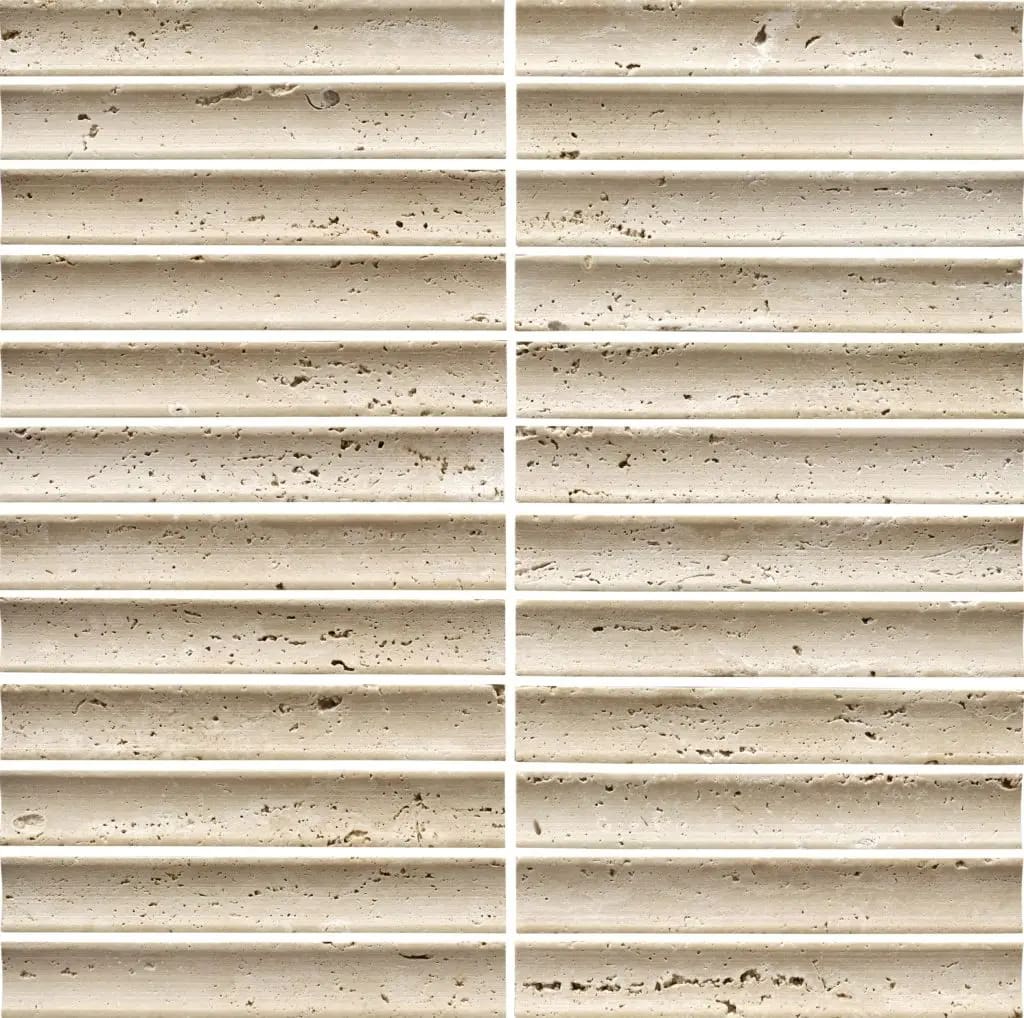
Travertine is everywhere in Australian interiors right now: warm, sun-washed floors, tumbled splashbacks, fluted vanity walls. But walk into any tile shop and you'll find two very different products sold under the same name: genuine natural travertine and travertine-look porcelain. They can look similar in a photo, yet they behave very differently once they're on your floor.
Here's an honest comparison to help you choose, room by room. To browse both side by side with live prices, see our travertine tiles page.
The short answer
- Choose natural travertine for character: feature walls, splashbacks, vanity walls and spaces where texture and one-off variation are the point, and where you're happy to seal and care for it.
- Choose travertine-look porcelain for performance: busy floors, wet areas, alfresco and pool surrounds, and anywhere you want the look with almost no upkeep.
Many of the best projects use both.
What natural travertine actually is
Travertine is a natural stone, a form of limestone laid down by mineral-rich spring water over thousands of years. Gas bubbles trapped as it forms leave the small holes and pits that give it its character, and the minerals give it colour, from ivory and beige through to red, walnut and black.
Because it's natural, no two pieces are the same. It's also porous and made of calcium carbonate, so it absorbs liquids unless sealed and can be etched by acids such as vinegar, lemon juice or acidic bathroom cleaners.
What travertine-look porcelain is
Travertine-look porcelain is a dense, fired porcelain tile with a travertine pattern and texture printed and pressed into the surface. Modern printing is very convincing: soft veining, tonal shifts and even the look of filled pits. Porcelain absorbs very little water, so it doesn't need sealing and isn't affected by acidic spills.
Side-by-side comparison
| Natural travertine | Travertine-look porcelain | |
|---|---|---|
| Look | Genuine stone, every piece unique | Consistent pattern, very convincing in quality ranges |
| Texture | Real pits, tumbled edges, natural feel underfoot | Smooth to lightly textured |
| Sealing | Needs sealing, then resealing over time | None needed (grout can be sealed) |
| Acids and stains | Can etch and stain | Highly resistant |
| Slip resistance | Depends on finish: tumbled and honed are best | Tested and rated (e.g. P4, P5) |
| Outdoors and pools | Possible with the right finish and sealing | Easy: choose a 20mm P5 paver |
| Large formats | Usually smaller formats | 600x1200 and bigger for fewer grout lines |
| Cost | Varies widely by grade and format | Usually more predictable per m² |
| Long-term upkeep | Ongoing care | Very low |
For the wider stone-versus-porcelain question, including marble and limestone, see our natural stone vs porcelain guide.
Room-by-room recommendations
Bathroom floors
Wet floors need grip and easy cleaning. A travertine-look porcelain tile with a P4 rating, such as the matt Normandy SmoothGrip in Classico, Grigio or Navona, is the practical choice. If your heart is set on real stone, keep it to a honed or tumbled finish and seal it properly.
Shower walls, vanity walls and niches
This is where natural travertine shines. Tumbled subway, finger and fluted formats, like the Elementa Travertine range in Ivory, Red and Black, bring real texture to a wall that doesn't get walked on. Seal it and use a pH-neutral cleaner.
Kitchen splashbacks
Natural travertine mosaics make beautiful splashbacks. Our Travertine Mosaic comes in column, concave, long fan, penny round, picket and triangle patterns. Seal it well and wipe up oil and acidic splashes promptly. (More ideas in our kitchen splashback guide.)
Living areas and hallways
Large-format travertine-look tiles give you the warmth of stone with very few grout lines, and they shrug off everyday wear. A soft travertine colour in 600x1200 suits both Mediterranean and pared-back modern homes.
Alfresco, paths and pool surrounds
For open outdoor areas that get wet, slip resistance comes first. A 20mm porcelain paver rated P5, like the Entiva Travertine External Paver in Grey, Sand or White, gives you the travertine look with excellent grip and almost no maintenance. Our outdoor tiles and pavers guide covers how pavers are laid.
The "both" approach
Our favourite travertine projects mix the two: natural travertine where you touch and see it up close, on the vanity wall, splashback or feature niche, and travertine-look porcelain where it has to work hard, on the floor, in the shower and outside. Matching the tones is easy when you can see both in one showroom.
Caring for natural travertine
If you choose real stone, a little care keeps it looking good for decades: seal after installation, clean with a pH-neutral stone cleaner, never use vinegar or bleach, and reseal when water stops beading. We've written a full guide: how to seal, clean and care for travertine tiles.
Frequently asked questions
Is travertine-look porcelain "fake"? It's a different material that recreates the look. Many people choose it deliberately because it performs better on floors and outdoors.
Can I use natural travertine on a bathroom floor? Yes, with a honed or tumbled finish and proper sealing. For the most slip resistance and the least upkeep, a P4 travertine-look porcelain is easier.
Does travertine-look porcelain need sealing? No. You can seal the grout if you want extra stain protection.
Which is better around a pool? A 20mm P5 porcelain paver. It offers better grip and doesn't need sealing against pool chemicals.
See them side by side
The difference between real and porcelain travertine is easiest to judge in person, by touch and in natural light. Visit our Dandenong showroom at 29A Dandenong Street, or call (03) 8753 2413.